Beyond the Bedside: How Nurses Strengthen Public Health
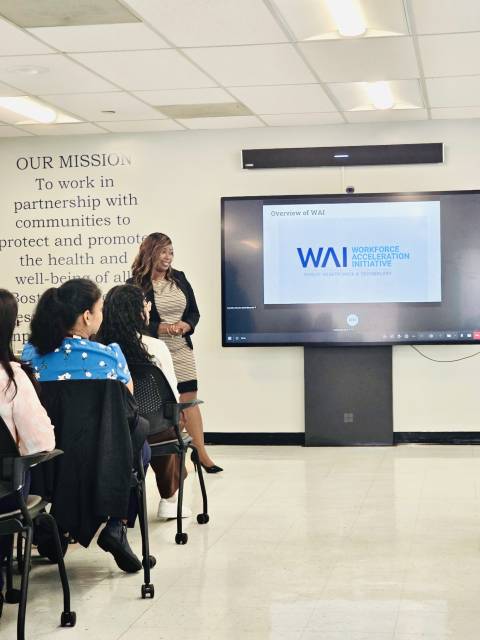
Across the United States, public health authorities (PHAs) are seeking to modernize the systems and processes they need to keep our communities healthy. The CDC Foundation supports this modernization effort through the Workforce Acceleration Initiative (WAI), hiring more than 140 staff and placing them in more than 70 state, tribal, local and territorial PHAs across the nation to bolster public health capacity.
Coordinating these efforts is a cadre of WAI project managers who collaborate with WAI technical leads, field staff and PHA partners to support these necessary system enhancements. Preparing and monitoring project agreements, onboarding WAI staff, defining scopes of work and tracking milestones and deliverables requires a unique public health management skill set. Our nation’s public health nurses are well positioned to drive these complex public health initiatives to success given their strong backgrounds in keeping communities healthy, analyzing health trends, improving access to care and advancing wellness initiatives.
While on the surface traditional nursing skills may seem a step removed from larger public health initiatives, policy and implementation, the discipline and skills required of public nurses are often directly compatible. With deep experience in assessment, diagnosis, planning, implementation and evaluation, nurses are well suited to achieve the objectives and key performance indicators required in complex public health initiatives.
For any new initiative to succeed, it requires first defining the project objectives, stakeholders, scope and feasibility. Once defined, implementers need to have clear deliverables, schedules and resources, reporting meticulously on progress and processes. In nursing, clinical assessment—gathering comprehensive patient information, identifying needs and risks and forming an initial patient’s care plan—is essential to patient health. Effective care involves careful planning, goal setting, considered interventions and defined timelines, adhering to accurate clinical documentation that supports accountability and continuity.
Micro-level Care and Macro-Level Results
Even the more granular levels of nursing care translate well to implementing larger-scale public health initiatives. When patients first arrive in a clinical setting, nurses use triage to rapidly sort them by urgency of need. Once at the bedside, they continuously monitor patient vital signs—blood pressure, pulse, respiration rate, temperature—against baseline, using clear, empathetic communication to educate patients on the processes involved in their care, an important component of patient health.
As implementers of public health initiatives, nurses can use that same mindset to prioritize tasks, escalate critical issues and focus limited resources on the highest-risk or highest-value items, tracking project progress and metrics, regularly reviewing project status and intervening when indicators deviate from targets. The clear and concise language used to educate patients is equally applicable for stakeholder briefings, training sessions and creating accessible materials that drive project adoption and alignment.
In addition, the ability to make rapid decisions under pressure and the critical thinking skills that nurses possess can be used in times of crises to assess options quickly, enact emergency plans and navigate change control with clear rationales when managing complex projects.
Setting up For Success
For nurses who are seeking to move into project management, studying core project management frameworks is a great place to start. As hands on caregivers, nurses are uniquely positioned to build a portfolio that translates clinical experience into measurable results, broadening their network and gaining practical exposure by shadowing or partnering with current project managers.
Across the United States, modernizing our public health system requires having the experts needed in place. By expanding the scope of practice for public health nurses to include complex public health project management, we can both tap into their existing expertise and bolster the professional skills that serve us all in creating safer and healthier communities.
Rachel Azanleko-Akouete, MPH, RN, is a registered nurse with over ten years of experience in nursing and public health.