
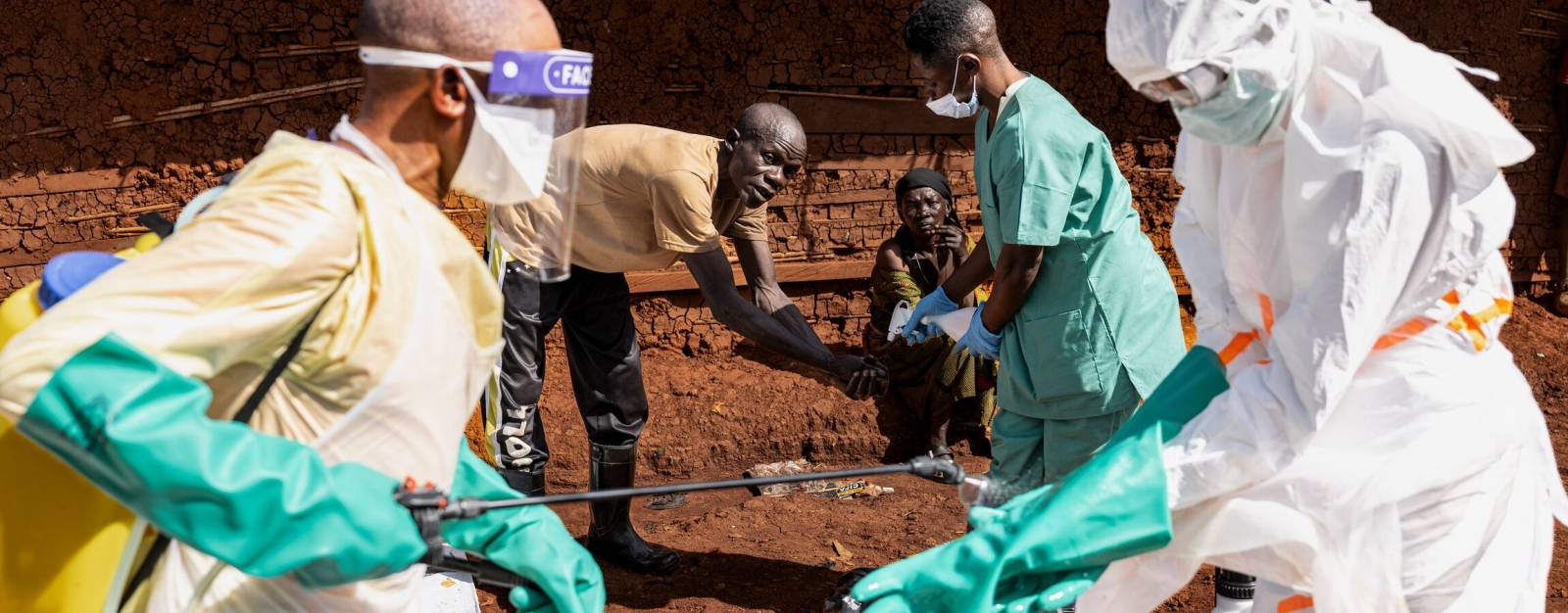
Responding to the Ebola Outbreak
An Ebola outbreak in the Democratic Republic of the Congo (DRC) is threatening lives and placing additional strain on already vulnerable health systems. Through its Emergency Response Fund, the CDC Foundation is working with partners to address critical gaps in the response and help get resources where they are needed most.
About Ebola
Ebola is a rare but serious and often deadly disease caused by a group of viruses found primarily in sub-Saharan Africa. It spreads through direct contact with the blood or other body fluids of a person who is sick with or has died from Ebola or through objects contaminated with those fluids.
The current outbreak is caused by Bundibugyo virus, one of several viruses that can cause Ebola disease in people. There is currently no approved vaccine for this type of Ebola, making rapid detection, isolation of suspected cases, contact tracing, infection prevention and control and trusted community engagement critical to slowing its spread.
The Current Ebola Outbreak
The current outbreak was identified in May 2026 and is the 17th Ebola outbreak recorded in DRC. It is spreading substantially faster than previous Ebola outbreaks and is already the largest Bundibugyo Ebola outbreak ever recorded. For the latest data on reported cases, visit CDC’s situation summary.
Health systems in the region face significant strain from limited infrastructure, population movement and insecurity. Without rapid, coordinated action, the outbreak can continue to grow.
CDC estimates that suspected cases are currently isolated only about 30 percent of the time. Responders also face shortages of transportation and reliable communications, while ongoing insecurity can restrict international responders’ access to some affected areas.
These challenges slow the work needed to contain Ebola, including finding and isolating suspected cases, transporting specimens for testing, tracing contacts and sharing accurate information with communities.
How the CDC Foundation Is Helping
The U.S. Centers for Disease Control and Prevention (CDC) has identified three urgent gaps where private support can make an immediate difference. Through its Emergency Response Fund, the CDC Foundation is mobilizing partners to help close these gaps.
Each CDC-identified project will run for 12 months and can be supported independently.
Transportation
Motorbikes, ambulances, field vehicles and fuel to move responders, specimens and suspected patients quickly and safely and to provide dignified transport for the deceased.
Quickly isolating suspected cases is one of the most effective ways to slow Ebola, but transportation remains a major barrier. Without safe vehicles, suspected patients may need to rely on family members or taxis, potentially increasing exposure risk.
Reliable transportation also helps response teams and contact tracers reach communities, moves specimens to laboratories for faster testing and provides families with safe, dignified transportation for loved ones who have died.
Support for this priority would address transportation gaps in:
- Democratic Republic of the Congo: Motorbikes with riding gear and ambulances for health zones in six affected and five at-risk provinces, including Kinshasa, along with one year of fuel.
- Uganda: Motorcycles for specimen transport, regional vehicles, ambulances and field vehicles for the National Public Health Emergency Operations Center.
In emergencies like the ongoing Ebola outbreak, first responders rely on rugged, dependable vehicles to access field sites, transport samples and provide safe, dignified transport for those who have died.
During the 2014-2016 Ebola response in West Africa, the CDC Foundation used donations to provide vehicles to support the massive response effort.
Connectivity and Outreach
Starlink satellite and solar kits, mobile phones, data and public SMS alerts and survivor-led outreach to counter misinformation.
Reliable communication supports nearly every part of an outbreak response. Field teams need to share surveillance information, coordinate with response leaders and quickly report suspected cases, including from hard-to-reach areas. At the same time, communities need accurate information from people they trust. Misinformation and mistrust can discourage people from seeking care or following safe burial practices. Ebola survivors can serve as trusted messengers, helping ease fears and encourage care-seeking and safe burials.
Support for this priority would strengthen communication and outreach in:
- Democratic Republic of the Congo: Starlink satellite and solar panel kits for health zones in six affected and four at-risk provinces, along with survivor-led outreach using SMS, radio and print materials.
- Uganda: Starlink satellite kits for Ministry of Health facilities, mobile phones for Village Health Team members, data support for digital health tools and support for the national 6767 public SMS alert system.
Connectivity is a critical need in any emergency to coordinate an effective response and share timely data.
First responders can play a critical role in educating people during an outbreak to keep them safe.
Workforce Training
Surge staff, training and preparedness exercises that build local response capacity in hard-to-reach areas and neighboring countries.
Insecurity in parts of DRC can prevent CDC and other international partners from deploying staff to some affected areas.
Investing in local epidemiologists and frontline health workers—along with accessible, low-bandwidth training materials—extends the response into communities that outside responders may not be able to reach, directly supporting surveillance, contact tracing and case-finding in some of the highest-risk locations.
Building workforce capacity beyond affected areas is also important. Neighboring countries need trained responders who can quickly detect and contain cases if the outbreak crosses borders. Support for this priority would strengthen response and preparedness across the region:
- Democratic Republic of the Congo: Survivor-led risk communication and community engagement.
- Uganda: Infection prevention surge staff, Ebola prevention and early detection through a mining sector health program and mobile-friendly Emergency Medical Team training for trainers and participants.
- Burundi, Central African Republic and South Sudan: Surge staff, simulation exercises, rapid response team training and emergency operations support.
Flexible Support When and Where It Is Needed
During an outbreak, needs can change quickly. Flexible philanthropic funding can help close critical gaps and provide resources that complement government and public health response efforts.
The CDC Foundation has played this role before. During the 2014–2016 West Africa Ebola epidemic, the Foundation mobilized $56 million in donor support to provide essential supplies and strengthen response operations on the ground, including support for emergency operations centers in Guinea, Liberia and Sierra Leone. Today, philanthropic support can once again help public health teams get the people, tools and resources they need to respond quickly and help contain Ebola before it spreads further.
Help Support the Ebola Response
Stopping Ebola requires a coordinated response and resources that can keep pace with a changing outbreak. Donations to the CDC Foundation’s Emergency Response Fund help address urgent needs and strengthen the work of public health teams responding on the ground. Your support can help provide critical resources to protect communities, save lives and prevent further spread.
Donate now to support the Ebola response.
Learn more: If you would like more information on ways to partner with the CDC Foundation, please contact Advancement at advancement@cdcfoundation.org or via phone at 404.653.0590.